
The First National University Hub
for Aeronautical Training is established

Bachelor’s Degree in Management Engineering – Class L‑09
Aeronautical Maintenance and Advanced Technology
- Degree Programme: Aeronautical Maintenance and Advanced Technologies
- Faculty: Management Engineering – Class L‑09
- CFU: 180
- Entry Requirements: [TSS] – Upper Secondary School Diploma
A degree programme that provides students with a solid engineering foundation, tailored to the operational needs of the aeronautical maintenance sector.
The First National University Hub for Aeronautical Training
From the synergy between the International Telematic University UNINETTUNO and AEA – Aircraft Engineering Academy comes the first National University Hub dedicated to training in the aeronautical and advanced mobility sector. The project represents a significant step forward in strengthening the connection between universities, the aeronautical industry, and the labor market, introducing an educational system in which academic and technical-professional skills are developed in a coordinated manner.
This is the first european aeronautical hub specifically designed to structurally integrate academic education with certified technical training and direct links to the aviation industrial system. The project introduces an innovative model that combines university-level education, technical-professional competencies, and industrial placement, creating an integrated educational pathway tailored to the needs of the aeronautical sector
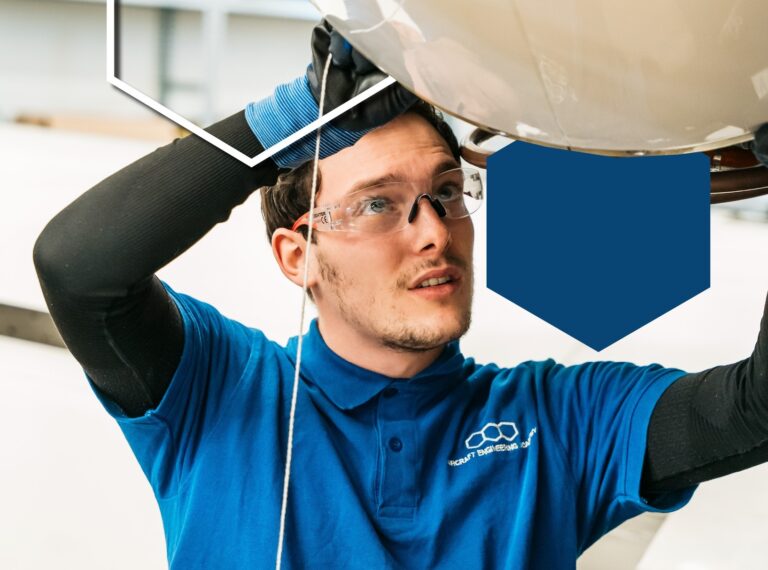
One of the most distinctive aspects of the agreement concerns the recognition of technical competencies acquired through training paths compliant with European EASA Part‑147 standards. Students who have already completed the technical training program at the Aircraft Engineering Academy, or who hold an Aircraft Maintenance Technician License certifying competencies in accordance with European aeronautical maintenance regulations, may access the degree program with recognition of part of the educational activities already completed. At the same time, students enrolled in UNINETTUNO degree programs will have the opportunity to gain direct exposure to the professional world of aircraft maintenance and to take, at AEA’s certified facilities, the module examinations required to obtain the Aircraft Maintenance Technician License, including as independent candidates. This system therefore makes it possible to develop an integrated pathway in which students can earn a university degree while simultaneously progressing along the technical route leading to the European professional license.
Learning Objectives
The educational objectives of the Bachelor’s Degree in Management Engineering – Industrial (Class L‑9), specialization in Aeronautical Maintenance and Advanced Technologies, are aimed at developing a comprehensive engineering education that integrates solid theoretical foundations with applied skills specific to the aeronautical sector. In particular, the program seeks to provide fundamental knowledge in mathematics, physics, and chemistry (through courses such as Calculus and Linear Algebra, Physics, and Chemistry), together with advanced IT and programming skills, which are essential for the analysis and management of complex systems.
At the same time, the degree program is designed to develop core engineering competencies in the industrial and aerospace fields, with a specific focus on aeronautical materials and structures, electrical and energy systems, aerospace systems, and gas turbine engines. A central objective is also the acquisition of skills related to the management and optimization of maintenance processes, supported by the study of disciplines such as Maintenance Processes and Methods and Operations Research.
The educational pathway further aims to foster the development of transversal skills, including analytical abilities, problem‑solving, technical design capabilities, and teamwork, as well as an understanding of regulatory frameworks and operational environments within the sector. From this perspective, the program promotes the integration of theory and practice through internship activities and the recognition of parallel training pathways, enabling students to acquire competencies aligned with the professional requirements of the aeronautical maintenance and advanced technologies sectors.
Skills Acquired
The degree program enables students to develop both technical‑specialist and transversal skills aligned with the needs of the aeronautical and industrial sectors. In particular, graduates acquire the ability to analyze, manage, and optimize complex systems, with specific reference to aerospace plants and systems, engines, and maintenance processes. Thanks to strong IT and programming competencies, graduates are able to use advanced digital tools for system monitoring, diagnostics, and performance improvement. Knowledge in management and quantitative disciplines further enables graduates to plan and optimize resources and processes, supporting effective decision‑making in complex production environments. These skills are complemented by competencies in technical drawing interpretation, knowledge of materials and aeronautical structures, as well as an understanding of electrical and energy systems. The program also fosters the development of transversal skills such as problem solving, critical thinking, the ability to work in multidisciplinary teams, and the capacity to operate in highly complex technological contexts, together with proficiency in technical English and the ability to engage in continuous professional development.
Do you hold an Aircraft Maintenance License?
Request All Information About the Course
Fill in the form in just 1 minute and we will contact you with no obligation
Discover the Benefits!
By virtue of the recognition of competencies acquired through the AEA training pathway compliant with EASA Part‑147 standards and, more generally, for students who already hold an Aircraft Maintenance Technician License (AML), a Certificate of Recognition (CoR) for the basic course for a B licence, or certification of having successfully completed all individual examinations required under EASA Part‑66 for the attainment of a B1 or B2 licence, it is possible to access a three‑year university degree program that recognizes the competencies already acquired. In particular, following an assessment carried out by the University in compliance with current regulations, such students are granted recognition of part of the academic credits and are therefore required to sit only for examinations complementary to the competencies already acquired within the AML framework. Completion of the bachelor’s degree program requires passing core and foundational examinations, including those in the mathematical, physical, and management fields (such as Calculus and Linear Algebra, Mathematical Methods for Engineering, Physics I, and Operations Research), as well as the final degree examination. This approach allows prior technical‑professional competencies to be fully valued, fostering effective integration between academic education and professional training, and enabling students to obtain a university degree without duplication of learning contents already acquired.
Are you a student of the “Aeronautical Maintenance and Advanced Technologies” Degree Program?
Request All Information About the Course
Fill in the form in just 1 minute and we will contact you with no obligation
Discover the Benefits!
Students enrolled in the Bachelor’s Degree in Management Engineering – Industrial (Class L‑9), specialization in Aeronautical Maintenance and Advanced Technologies, who do not yet hold an Aircraft Maintenance Technician License (AML), are offered the opportunity to undertake, alongside their academic studies, a professional training pathway aimed at obtaining the license. In particular, the degree program allows access to the examinations required for the issuance of the AML at AEA’s EASA Part‑147 certified facilities, offering students the opportunity to integrate university education with a technical qualification that is highly recognized at the European level. This integration represents significant added value, as it enables the synergistic acquisition of both theoretical and practical skills, thereby substantially enhancing graduates’ employability prospects. Upon completion of the pathway, students may also benefit from the job placement services provided by AEA, facilitating a faster and more effective entry into the aeronautical maintenance and advanced technologies sector.